
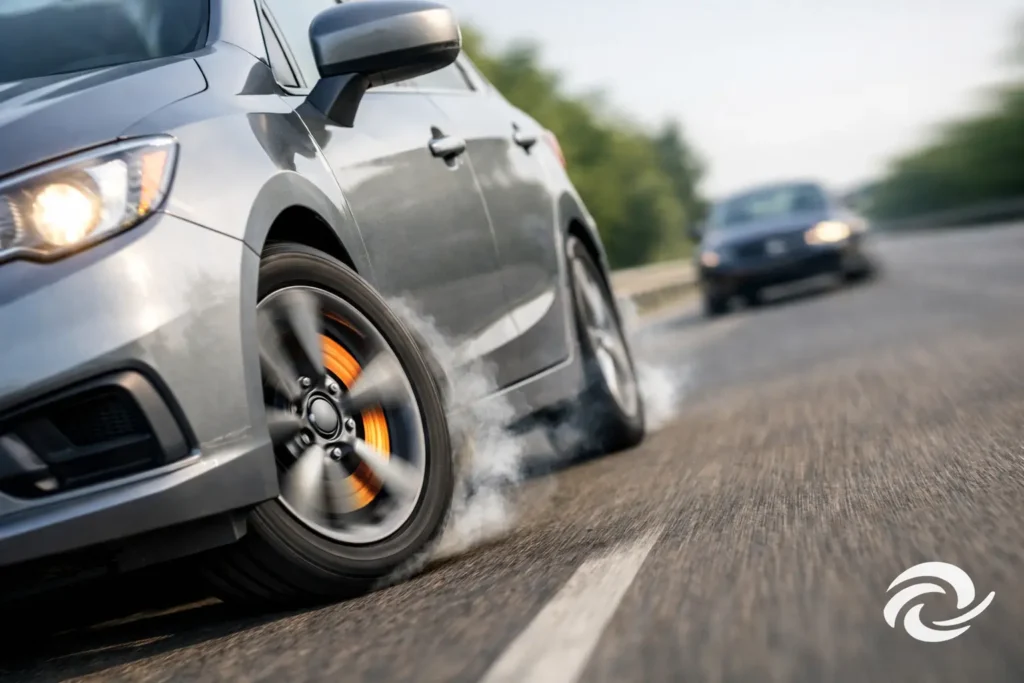
You press the brake pedal at a stoplight and the steering wheel tugs to one side. That moment matters. If your car pulls while braking, it is not just annoying – it is a warning that something in the braking, tire, or suspension system may not be working evenly.
Some causes are relatively simple, like uneven tire pressure. Others point to brake caliper problems, worn suspension parts, or damaged rotors that can affect how safely your vehicle stops. The key is not to guess. A vehicle that no longer brakes in a straight line needs attention before the problem gets worse.
What it means when a car pulls while braking
When your vehicle pulls during braking, one side of the car is slowing down differently than the other. That imbalance creates a sideways tug through the steering wheel or chassis. In plain terms, one wheel may be braking harder, braking later, or losing traction compared to the opposite side.
This is why the issue can feel different from driver to driver. Some people notice a strong pull only during hard stops. Others feel a lighter drift every time they brake. In some cases, the pull comes with vibration, a soft pedal, squealing, or a burning smell. Those extra symptoms help narrow down the real cause.
The most common reasons your car pulls while braking
A sticking brake caliper
This is one of the most common brake-related causes. The caliper applies pressure to the brake pads so they clamp the rotor. If a caliper sticks, one brake may stay partially engaged or fail to apply correctly.
If the caliper on one side grabs harder than the other, the vehicle can pull sharply during braking. You may also notice uneven brake pad wear, extra heat from one wheel, or a smell after driving. Left alone, a sticking caliper can damage pads and rotors quickly.
Uneven brake pads or worn rotors
Brake pads and rotors should wear as evenly as possible from side to side. If one side has much thinner pads, contaminated pads, or a damaged rotor surface, braking force may become uneven.
Warped or heavily worn rotors can also change how the pads contact the wheel. Sometimes drivers describe this as pulling. Other times it feels more like pulsation in the pedal with a slight drift to one side. It depends on how severe the wear is and whether more than one component is involved.
Brake hose problems
A worn or internally collapsed brake hose can restrict hydraulic pressure. That means brake fluid may not move properly to or from a caliper. The result can mimic a stuck caliper, with one brake applying differently than the other.
This is not the first cause many drivers think of, but it is a real one. If the hose is the issue, replacing pads alone will not fix the pull.
Tire pressure or tire condition
Not every braking pull starts in the brake system. If one front tire is underinflated, has uneven tread wear, or has internal damage, the vehicle may pull when weight shifts forward under braking.
This is why a proper inspection matters. The symptom shows up when braking, but the root cause may be where the tire meets the road. A quick pressure check can rule out one simple possibility, though it should not replace a full diagnosis if the problem continues.
Suspension or steering wear
Worn suspension parts can make braking feel unstable. Bushings, ball joints, tie rods, control arms, shocks, and struts all affect how the vehicle stays planted and tracks straight.
When these components wear out, braking puts extra load on already loose parts. That can produce pulling, wandering, or a nose-dive feeling. In these cases, the brake system may be working, but the vehicle still does not stay straight because the suspension cannot control movement properly.
Wheel alignment issues
Poor alignment does not always cause a brake pull by itself, but it can make the symptom more noticeable. If the car already drifts while driving straight, braking often exaggerates it.
Alignment also interacts with tire wear. A vehicle with bad alignment may develop uneven tires, and then both issues start feeding into each other. That is why pulling complaints sometimes involve more than one repair.
Is it safe to keep driving?
Usually, no – at least not for long.
If your car pulls while braking, stopping distance and control can be affected. A minor pull today can become a hard jerk tomorrow, especially if the problem is a failing caliper, damaged rotor, or worn suspension part. Emergency braking is where these faults become much more serious.
There is also the cost factor. Brake issues rarely stay isolated. A stuck caliper can burn through pads and overheat a rotor. A tire problem can cause faster suspension wear. Catching the issue early often means a simpler repair and less downtime.
If the pull is strong, the brake pedal feels unusual, or you hear grinding, it is smart to stop driving and have the vehicle inspected as soon as possible.
How a technician diagnoses a braking pull
A good diagnosis starts with confirming when the pull happens. Is it only under hard braking, only at higher speeds, or every time the pedal is pressed? Does it pull left or right? Is there vibration, noise, or heat from one wheel?
From there, the inspection usually includes brake pad thickness, rotor condition, caliper function, brake fluid condition, hose condition, tire pressure, tire wear, and visible suspension play. In many cases, a road test is also needed because some problems only show up under load.
This is where honest service matters. Replacing parts based on guesswork can get expensive fast. The right repair depends on the actual cause, and sometimes there are two related issues instead of one.
What the repair might involve
There is no single fix because the symptom has several possible causes.
If a caliper is sticking, the repair may involve replacing the caliper, servicing the hardware, and installing new pads and rotors if they were damaged. If the issue is uneven pad wear alone, the repair may be more straightforward. If tires or suspension parts are contributing, those need to be addressed too, or the pull may remain.
Brake repairs should also be tested after completion. It is not enough to install parts and send the car on its way. The vehicle should stop evenly, the pedal should feel consistent, and there should be no remaining drift or vibration.
When to book service right away
Some warning signs mean you should not wait for your next free afternoon. Get the vehicle checked promptly if the pull suddenly gets worse, the brake warning light comes on, the steering wheel jerks during stops, or one wheel feels much hotter than the others after driving.
Grinding noises, smoke, a burning smell, or a brake pedal that feels soft or spongy also move this from inconvenience to safety issue. For busy drivers, that is exactly why mobile service can make sense. Instead of arranging a shop drop-off and losing half your day, you can have the vehicle inspected where it is parked and get clear answers faster.
Preventing the problem from coming back
Regular brake inspections help, especially before the pads wear down too far. Tire pressure checks matter more than many drivers realize, and rotating tires on schedule can help catch uneven wear before it starts affecting braking.
Suspension issues are also easier to manage when they are found early. If your car has started bouncing more, diving when braking, or feeling loose over bumps, those changes should not be ignored. They often show up before a more obvious pull develops.
If you are in Grand Cayman and your vehicle does not feel right under braking, getting it checked sooner is the practical move. A problem like this rarely fixes itself, but it often gets more expensive if you wait.
When a car pulls during braking, trust what the vehicle is telling you. Straight, controlled stopping is not something to put off for later.