
That extra bounce after a speed bump is easy to ignore – until the car starts feeling loose in corners, nose-dives when braking, or chews through tires faster than it should. When people search for shocks vs struts symptoms, what they usually want is a simple answer to one question: is my suspension wearing out, and how serious is it?
The short answer is that bad shocks and bad struts can cause many of the same driving problems. Both help control how your vehicle rides, handles, and stays planted on the road. But they are not the same part, and the symptoms can show up a little differently depending on your vehicle design and how far the wear has progressed.
What shocks and struts actually do
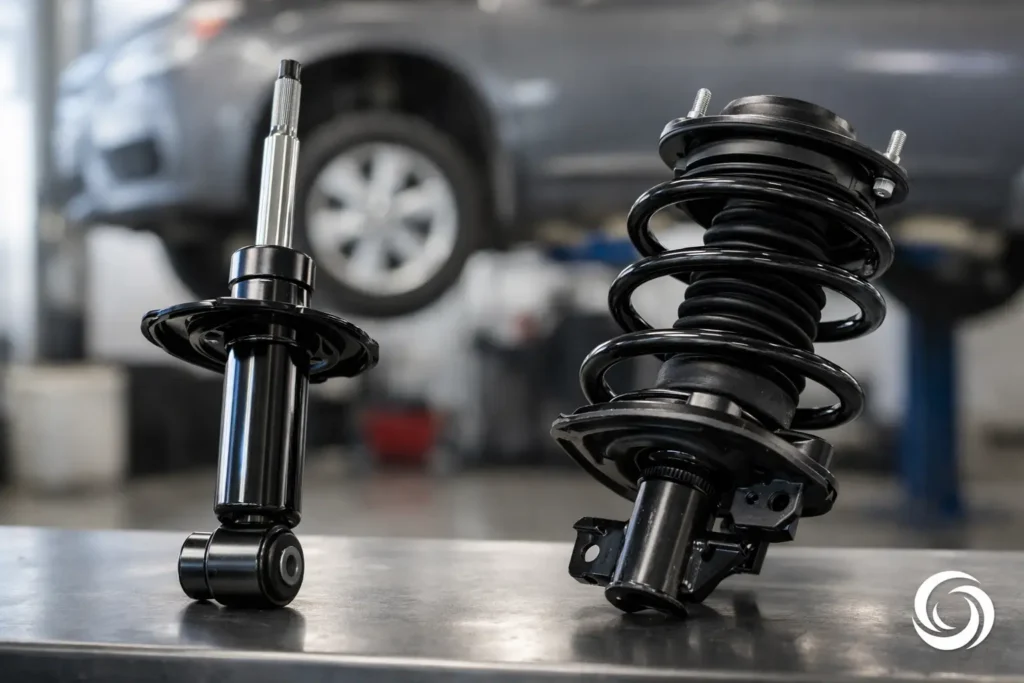
Shocks are designed to control spring movement. They reduce bouncing, help keep your tires in contact with the road, and make the ride more stable. If the springs absorbed every bump without control, your vehicle would keep bobbing long after the pothole was gone.
Struts do that damping job too, but they also play a structural role in many vehicles. A strut is built into the suspension assembly and helps support the vehicle while affecting steering and alignment. That is why worn struts can create handling and tire wear issues more directly than worn shocks in some setups.
For everyday drivers, the key point is simple: if either one is failing, the car will usually tell you through ride quality, stability, braking feel, and tire behavior.
Common shocks vs struts symptoms
Most suspension complaints do not begin with a dramatic breakdown. They start small. The ride gets harsher, the vehicle feels unsettled, or you notice something just feels off on roads you drive every day.
Excessive bouncing after bumps
One of the clearest signs is continued bouncing after hitting a bump, dip, or speed hump. A healthy suspension should absorb the impact and settle quickly. If the car keeps moving up and down more than it should, the shocks or struts may no longer be controlling the springs properly.
This symptom often shows up gradually. Drivers adapt to it without realizing how much ride control has been lost until they ride in another vehicle or replace the worn parts.
Nose-diving during braking
If the front end drops sharply when you brake, worn front shocks or struts may be allowing too much weight transfer. That extra motion is not just uncomfortable. It can affect braking stability and make the vehicle feel less controlled in stop-and-go traffic or emergency braking situations.
A little front-end dip can be normal depending on the vehicle. The concern is when it becomes noticeably worse than before.
Squatting or swaying during acceleration and turns
If the rear of the vehicle squats hard when accelerating, or the body leans excessively in turns, the suspension may not be controlling weight movement well. Drivers often describe this as a floating, wallowing, or boat-like feeling.
That loose feeling matters most during lane changes, curves, and wet-road driving, where tire contact and body control become more important.
Uneven or accelerated tire wear
This is one symptom many people miss. Weak shocks or struts can let the tires bounce or lose consistent contact with the road surface. Over time, that can create irregular wear patterns, including cupping or patchy wear.
If you replace tires without addressing worn suspension parts, the new set may wear out early too. That is why tire condition can be a useful clue during suspension diagnosis.
Fluid leaking from the shock or strut body
Shocks and struts rely on internal hydraulic fluid. If you see oily residue or visible leaking on the outside of the unit, that is a strong sign the part is failing. Not every bad shock or strut will leak externally, but when you do see leakage, it should not be ignored.
A small amount of grime is one thing. Wet, oily buildup is another.
Clunking, knocking, or rattling noises
Worn shocks and struts themselves can contribute to noise, but so can related components such as mounts, bushings, and links. A clunk over bumps does not always mean the shock or strut is the only problem. Still, if the noise appears together with poor ride control, the suspension needs attention.
This is where proper inspection matters. Replacing one part while missing a failed mount or worn bushing can leave the real problem partly unresolved.
How bad strut symptoms can differ from bad shock symptoms
The overlap is real, but struts often create a wider range of issues because of their role in the suspension structure.
Struts may affect steering feel more noticeably
Because struts are tied into steering and alignment on many vehicles, worn struts can cause wandering, unstable steering response, or a front end that feels vague. The car may not track as cleanly as it should, especially at highway speed.
Struts can contribute more directly to alignment problems
A failing strut can change how the tire meets the road. That can lead to uneven tire wear, pulling, or poor straight-line stability. Worn shocks can also contribute to tire wear, but strut problems often show up with a stronger alignment connection.
Shocks may show up more as ride-control problems
On vehicles with separate shocks, the first signs are often excessive bouncing, rear-end instability, or a rough and unsettled ride. Steering may still feel fairly normal at first, which can fool drivers into waiting too long.
The catch is that waiting usually makes the problem more expensive. Weak damping can put extra stress on tires and suspension components, and it can reduce driver control when road conditions get worse.
When the symptoms are not actually shocks or struts
Suspension diagnosis is not always straightforward. A bad ball joint, worn control arm bushing, damaged tire, weak spring, or alignment issue can create similar complaints. Even incorrect tire pressure can make the ride feel harsher or more unstable.
That is why guessing based on one symptom alone can be risky. If your vehicle is bouncing, pulling, making noise, or wearing tires unevenly, the real answer comes from inspecting the full suspension system, not just one visible part.
How to tell when it is time to get it checked
If the vehicle feels noticeably different from a few months ago, that is reason enough to schedule an inspection. You do not need to wait until the ride becomes obviously unsafe.
A good rule is to pay attention when symptoms start affecting confidence behind the wheel. If braking feels less settled, corners feel sloppy, bumps feel harsher, or your vehicle no longer rides the way it used to, it is worth having a technician take a look.
Visible leaking, repeated bouncing, tire cupping, or suspension noise should move that inspection higher on your priority list. These are not symptoms that improve on their own.
Why driving on worn shocks or struts costs more than comfort
Many drivers think of shocks and struts as comfort parts, but they are really control parts. Yes, they affect ride quality. More importantly, they help your tires maintain traction and help your vehicle stay stable during braking, cornering, and emergency maneuvers.
Worn suspension components can also shorten tire life, increase wear on related parts, and make your vehicle feel more tiring to drive. On rough roads, that extra movement adds up fast.
There is also the convenience factor. Small suspension issues rarely happen at a good time. Catching them early gives you more control over scheduling, pricing, and repair choices instead of waiting until handling problems become urgent.
What to expect from a proper suspension inspection
A technician should do more than press down on one corner of the car and call it diagnosed. A proper check includes looking for leaks, worn mounts, damaged bushings, uneven tire wear, steering instability, and signs of poor damping during real-world driving conditions if possible.
If replacement is needed, the recommendation should be clear. You should know what parts are worn, why they matter, and whether related components should be replaced at the same time. Honest communication matters here because suspension repairs are about safety and value, not guesswork.
If you are dealing with shocks vs struts symptoms and want clear answers without losing a day at a repair shop, mobile service can make the process easier. In Grand Cayman, Cayman Auto Care helps drivers get suspension concerns checked where the vehicle already is, with straightforward communication and dependable workmanship.
When your car starts bouncing more, steering worse, or riding rougher, trust that change. Your vehicle is usually warning you before the problem gets bigger, and catching it early is one of the simplest ways to protect both your safety and your time.