
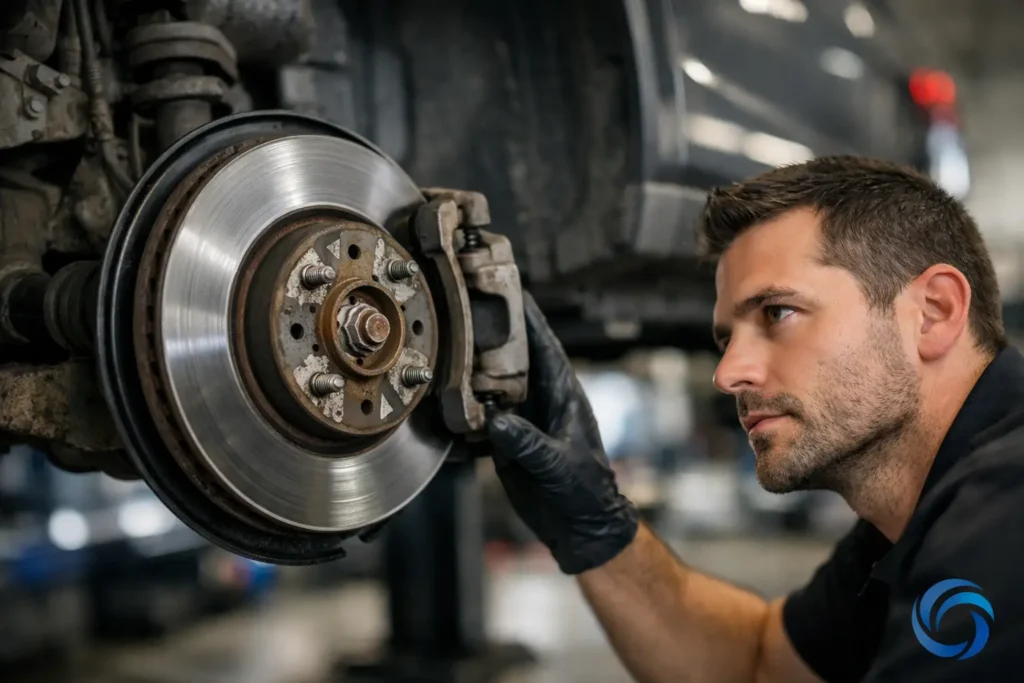
That high-pitched squeal when you stop at a light is not just annoying. It is often your car’s way of telling you brake repair may already be overdue. When braking starts to feel different – softer, louder, shakier, or slower – waiting usually makes the problem more expensive and less safe.
For most drivers, brake problems start small. A little noise in traffic. A slight vibration on the highway. A warning light that comes and goes. It is easy to put off service when the car still moves and stops. The trouble is that brakes rarely fix themselves, and worn parts tend to wear other parts with them.
Why brake repair matters more than most drivers think
Your brake system works as a team. Pads press against rotors to slow the wheels, brake fluid transfers force through the lines, and hardware keeps everything moving correctly under heat and pressure. If one part starts failing, the rest of the system has to work harder.
That is why one ignored issue can turn into several. Worn brake pads can damage rotors. Bad rotors can affect stopping distance and steering feel. Low brake fluid can point to leaks or worn components. What begins as a routine service can become a larger repair if it is left too long.
There is also the simple reality of daily driving. You need brakes to respond the same way every time, whether you are driving to work, picking up the kids, or dealing with sudden traffic. Consistent stopping power is not a luxury. It is basic safety.
Common signs you may need brake repair
Some warning signs are obvious, and some are easy to miss if you do not know what to look for. The most common one is noise. Squealing often means the pads are wearing thin. Grinding is more serious and can mean the pad material is gone and metal is contacting the rotor.
A vibrating brake pedal or shaking steering wheel during braking can point to warped rotors or uneven wear. If the car pulls to one side when you brake, you may have uneven pad wear, a sticking caliper, or a hydraulic issue. A soft or spongy pedal can mean air in the lines, old fluid, or a leak that needs immediate attention.
You should also pay attention to longer stopping distances. Many drivers adjust without realizing it. If you find yourself pressing harder than usual or needing more space to stop, something has changed in the system. That is reason enough to have it checked.
Brake warning lights matter too. They do not always mean the same thing, but they should never be ignored. Sometimes the fix is straightforward. Sometimes the light is the only early warning before performance gets noticeably worse.
What causes brake problems in the first place?
Normal wear is the most common cause. Brake pads wear down over time because they are designed to. Rotors also wear, especially if pads are left too long or the vehicle is driven hard in stop-and-go traffic.
Driving habits make a difference. Frequent hard braking, carrying heavy loads, and repeated short trips can all increase wear. Heat is another factor. Brakes operate under intense heat, and that affects pads, rotors, fluid, and hardware.
Then there is the issue of age and environment. Moisture can affect brake fluid. Rust can build up on rotors and hardware. Rubber components can dry out and crack. Even if you do not drive a lot, time alone can create brake issues that need professional attention.
Brake pads and rotors: repair or replace?
This is where many drivers want a simple answer, but it depends on the condition of the parts. Brake pads are routine wear items and need replacement when the friction material gets too thin. Rotors are a little more situational. In some cases, they can still perform well with new pads. In others, they are too worn, too thin, too grooved, or heat-damaged and should be replaced.
Replacing pads without checking rotor condition is not good practice. New pads need a proper surface to contact. If the rotors are rough or uneven, the new pads may wear badly, make noise, or fail to deliver smooth braking.
This is where honest inspection matters. Not every vehicle needs the same repair at the same time. The right recommendation should come from the actual condition of the braking components, not a one-size-fits-all estimate.
Why waiting usually costs more
A lot of people delay brake service because they want to avoid a repair bill. That is understandable. But with brakes, delay often increases the final cost.
If you catch worn pads early, the repair may stay limited to the pads and related service. If you keep driving until they grind, the rotors may be damaged too. If a caliper starts sticking and goes unchecked, it can overheat the brake on one corner, wear parts unevenly, and create a larger job. If fluid problems are ignored, brake performance can become unpredictable.
There is also the cost you do not see on paper – lost time, disrupted plans, and the stress of wondering whether the car is safe to drive. For busy families and working drivers, that inconvenience matters. Getting the issue handled early is usually the more practical option.
What to expect from a proper brake repair service
Good brake service starts with a real inspection, not guesswork. A technician should check pad thickness, rotor condition, caliper operation, brake fluid condition, and visible signs of leaks or uneven wear. Road testing can help confirm symptoms like vibration, pulling, or noise.
After that, the explanation should be clear. You should know what is worn, what still has life left, and what needs attention now versus later. Transparent service matters because brake work is not just about swapping parts. It is about making sure the system works correctly as a whole.
The repair itself should be followed by testing. Brakes should feel firm, responsive, and predictable before the job is considered complete. That last step matters more than many drivers realize.
Mobile brake repair makes the process easier
Brake issues are stressful enough without arranging rides, losing half a day at a shop, or sitting in a waiting room wondering when the car will be done. That is one reason mobile service makes sense for so many drivers.
When a qualified technician can inspect and perform brake repair where the vehicle already is, the process becomes far less disruptive. At home, at work, or even in a parking lot, you get the same practical outcome you want from any repair service – clear communication, dependable workmanship, and less downtime.
For drivers in Grand Cayman, that convenience can be especially valuable when schedules are tight or the vehicle does not feel safe to drive far. A mobile-first service like CAYMANAUTOCARE gives customers a direct, straightforward way to get brake concerns checked without adding another layer of hassle.
When brake repair should be treated as urgent
Some brake symptoms can wait a day or two for an appointment. Others should be treated as urgent. If the pedal suddenly feels soft, the car pulls sharply while braking, you hear grinding metal, or a warning light appears with reduced stopping performance, do not keep driving as if it is business as usual.
A burning smell near a wheel, smoke, or brakes that feel like they are sticking also need immediate attention. These signs can point to overheating or mechanical failure. In those cases, the safest choice is to stop driving and get the vehicle inspected as soon as possible.
How to protect your brakes between services
You cannot avoid brake wear forever, but you can reduce unnecessary stress. Smooth driving helps. Leaving more stopping distance gives you time to brake gradually instead of hard. Paying attention to early noises or changes in pedal feel can keep a small issue from becoming a major one.
Routine inspections help too, especially if you drive often in traffic or have noticed anything unusual. Brakes do not need drama to justify service. Sometimes the smartest move is checking them before they become a problem you can no longer ignore.
If your car is squealing, shaking, pulling, or taking longer to stop, trust what it is telling you. Brake problems rarely get better with time, but they are much easier to deal with when caught early.